
Preface
PowerPi officially launches the ESP32 IP6557 Dual SW3526 Multi-Port 140W High-Power Fast Charging Development Board. It integrates smart control, wireless IoT, and multi-fast-charging protocol support, pushing both intelligence and practicality to the extreme, making it an all-rounder in the fast-charging development field!
This development board supports Type-C PD3.1/DC input, PD3.1 UFCS protocol, and three independent fast-charging outputs. Next, PowerPi will take you through a detailed look at this solution and also review its performance.
PowerPi Development Board Design Reference – ESP32 IP6557 Dual SW3526
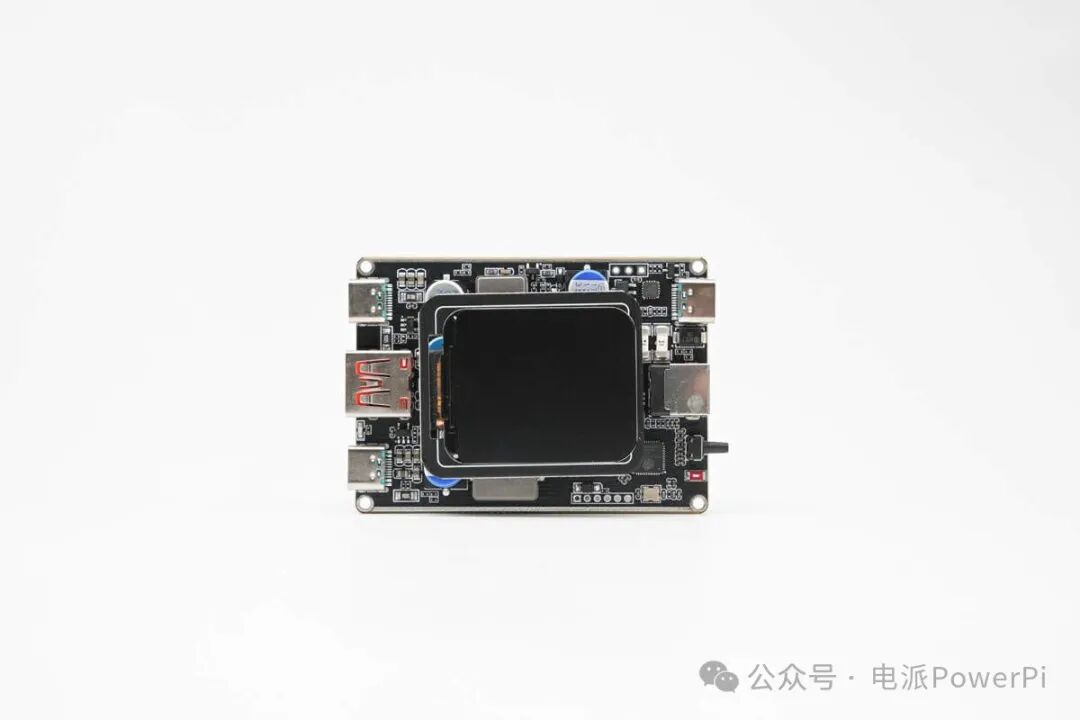
The ESP32 IP6557 Dual SW3526 development board design reference uses ESP32 alongside two smart SW3526 and Ingenic IP6557 protocol chips, featuring independent outputs, multi-protocol support, and wireless IoT. This reference design supports Type-C PD3.1/DC input, PD3.1 UFCS protocol, and three independent fast-charging outputs. On the front side, there’s a 30*35mm HD display, with output ports on the left and input ports on the right, giving the overall layout a compact design while keeping the board small in size.
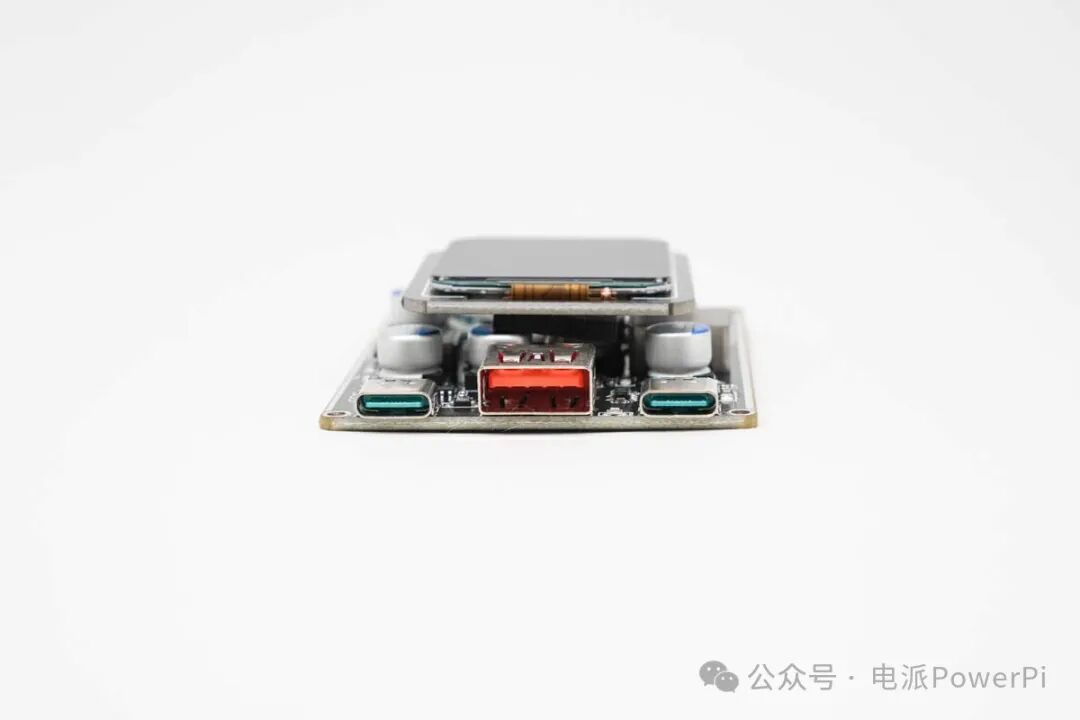
The output ports include dual USB-C and USB-A, with the left C1 port supporting up to 65W output and the USB-A supporting 45W output. The right C2 port supports up to 140W PD3.1 output.
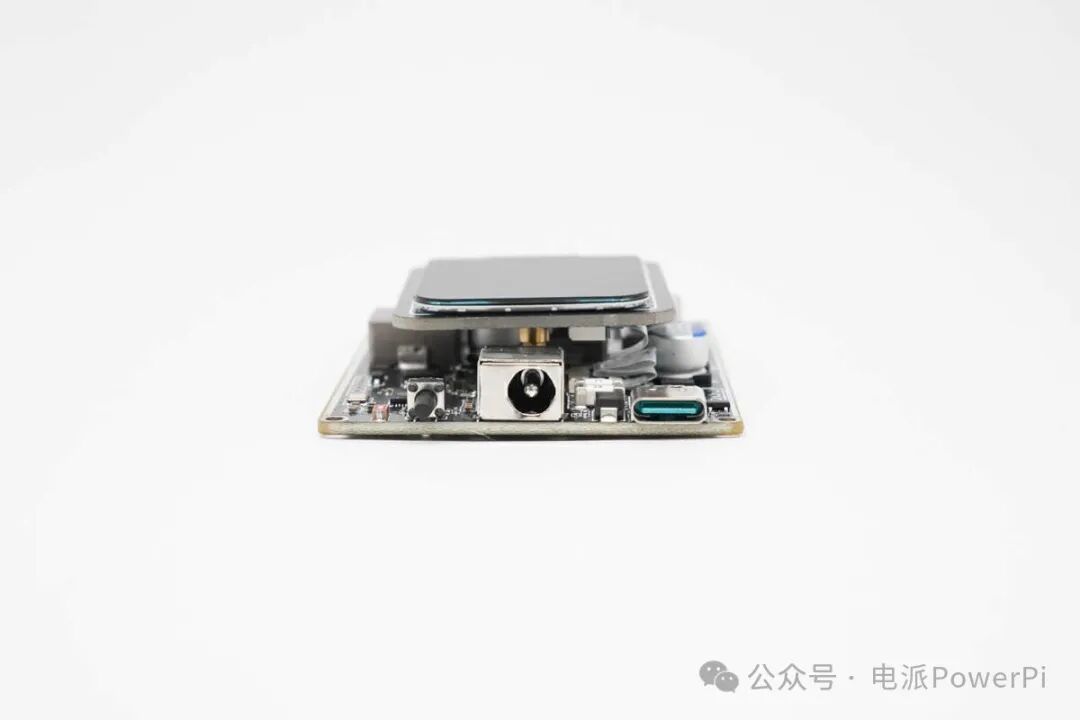
The ports include function buttons (screen on/off), DC input (working input voltage range 12-30V), and Type-C input. The Type-C input supports PD3.1 and can trigger up to 28V 5A.
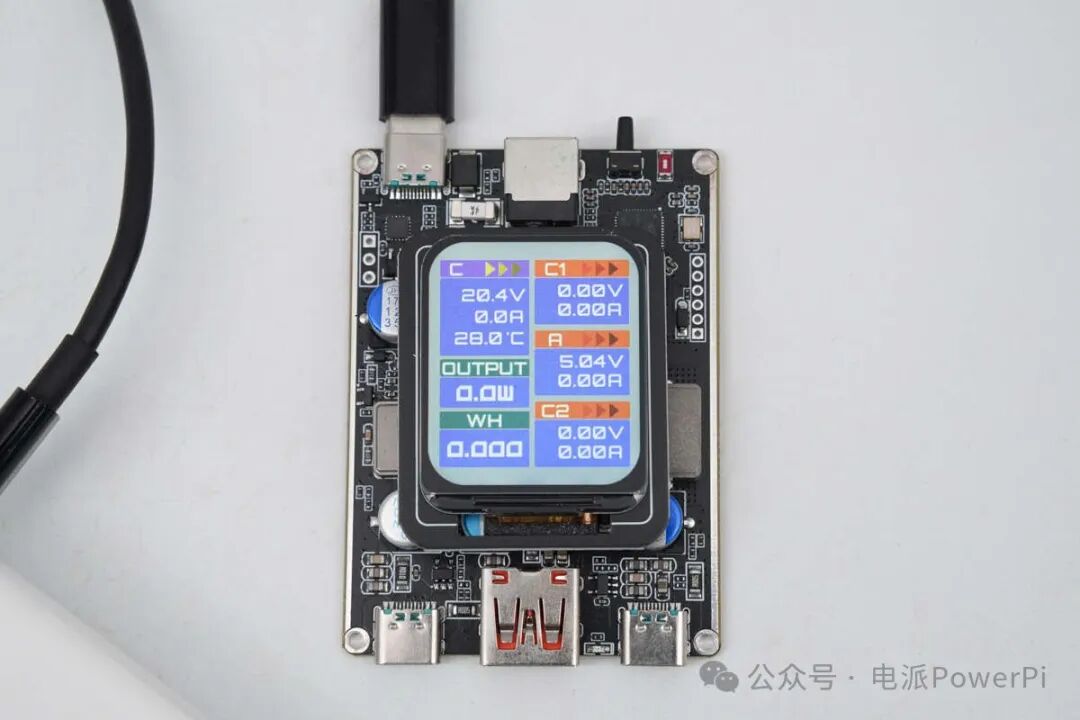
The 30*35mm HD display’s top-left corner shows the input interface status, displaying current device input voltage, current, and temperature. The right section shows the output status for C1, A, and C2 ports, including current output voltage and current. The bottom-left corner shows total output power and total output energy. Users can choose the appropriate power source based on their needs and monitor the power distribution across all ports in real-time.
In actual testing, this solution measures 71.59x51.04x15.06mm and weighs 42.4g.
Plan introduction
The development board design based on the ESP32 and two Zhirong SW3526 chips, along with the Yingjixin IP6557 protocol chip solution. This setup ensures the board has features like independent output, multi-protocol support, and wireless IoT capabilities.
ESP32
ESP32 is a system-on-chip with a dual-core 32-bit processor, Wi-Fi and Bluetooth dual-mode communication, rich peripheral interfaces, and various low-power modes. It provides powerful processing, reliable security, and wireless connectivity, making it a cost-effective choice for smart homes, industrial control, wearable devices, and other IoT applications.
Injoinic IP6557
Injoinic IP6557 is a SoC that integrates a boost-buck controller and path NMOS control functions. It supports QC2.0/3.0/3/4/5, FCP, HSCP, AFC, MTK, UFCS protocols, as well as USB-C PD3.1/PPS/ERP28V fast-charging outputs. It supports dual-port AC/CC output, plug detection, and six voltage levels: 5V, 9V, 12V, 15V, 20V, and 28V. It also has built-in recognition and support for E-Marker cables. With high integration, it only requires one inductor and a power MOSFET to achieve a buck-boost fast-charging solution, effectively reducing the overall size and BOM cost.
Ismarteare SW3526
Ismarteare SW3526uses two SW3526 chips for a dual-C port fast-charging solution. Through cooperation between the two SW3526s and an external MCU, it intelligently manages dual-port output power.
SW3526 is a highly integrated multi-fast-charging protocol chip that supports output via C or A ports. It integrates a 3.5A high-efficiency synchronous buck converter and supports PPS, PD, QC, AFC, FCP, SCP, PE, SFCP, and CC/CV modes. Only a few external components are needed to form a complete high-performance multi-protocol fast-charging solution.
Protocol testing
Type-C1
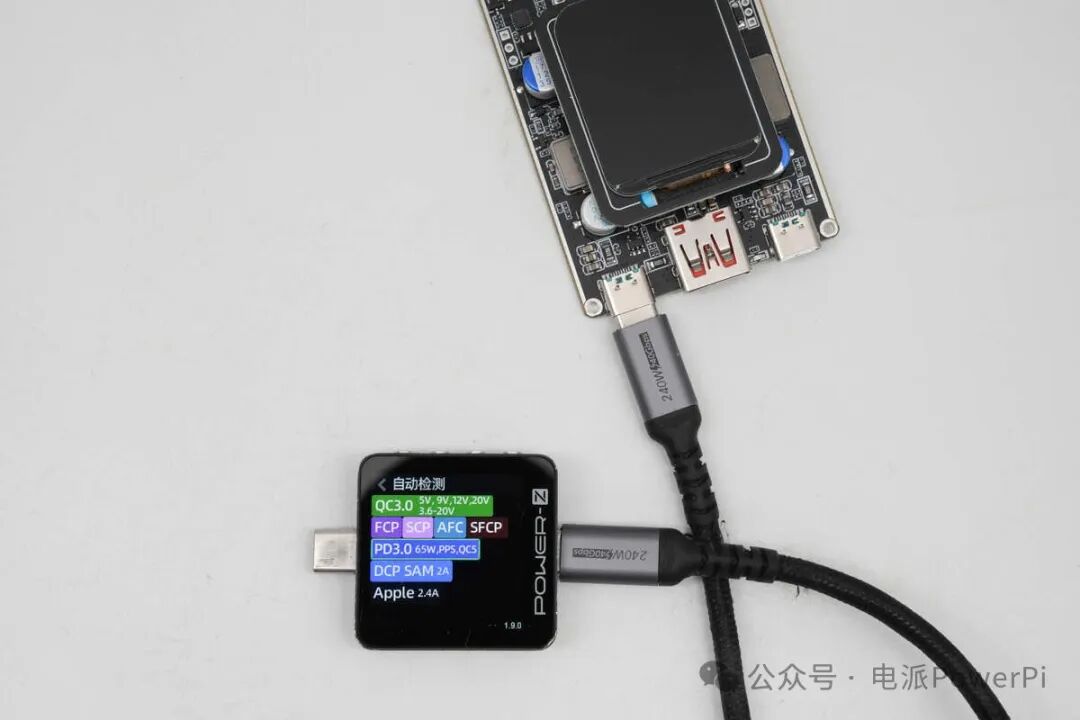
port was tested using a POWER-Z KM003C, which confirmed support for QC3.0, FCP, SCP, AFC, SFCP, PD3.0, PPS, QC5, SAM 2A, DCP, and Apple 2.4A charging protocols.
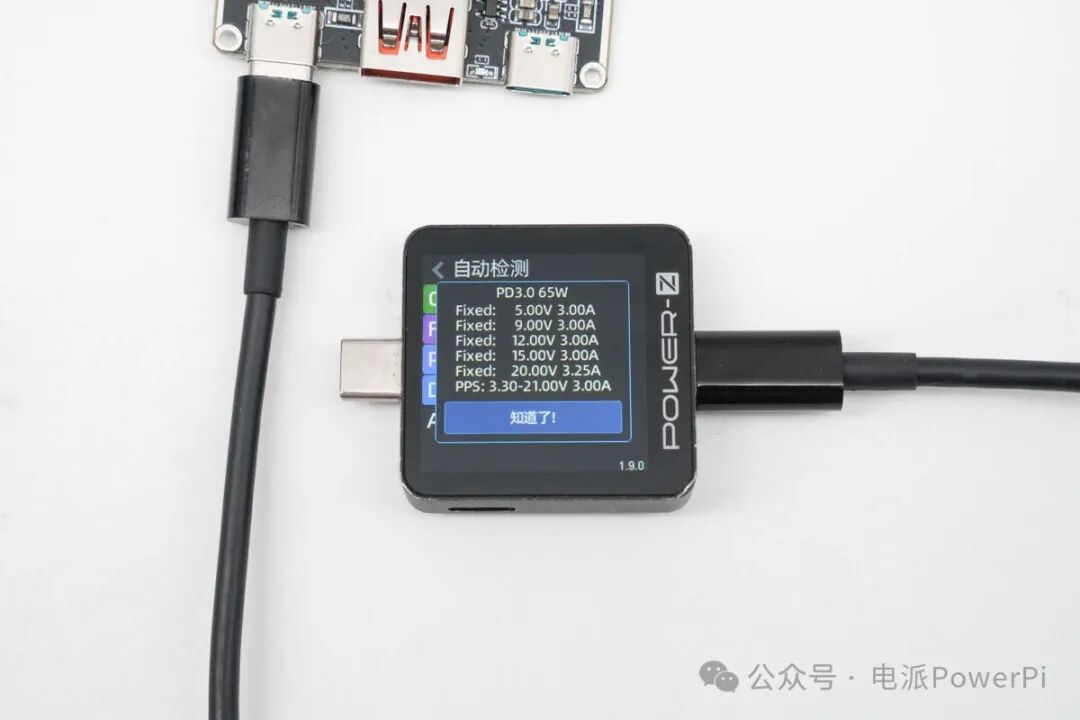
Regarding PDO messages, the C1 port supports five fixed voltages: 5V/3A, 9V/3A, 12V/3A, 15V/3A, and 20V/3.25A, plus one PPS range of 3.3-21V/3A.
Type-C2
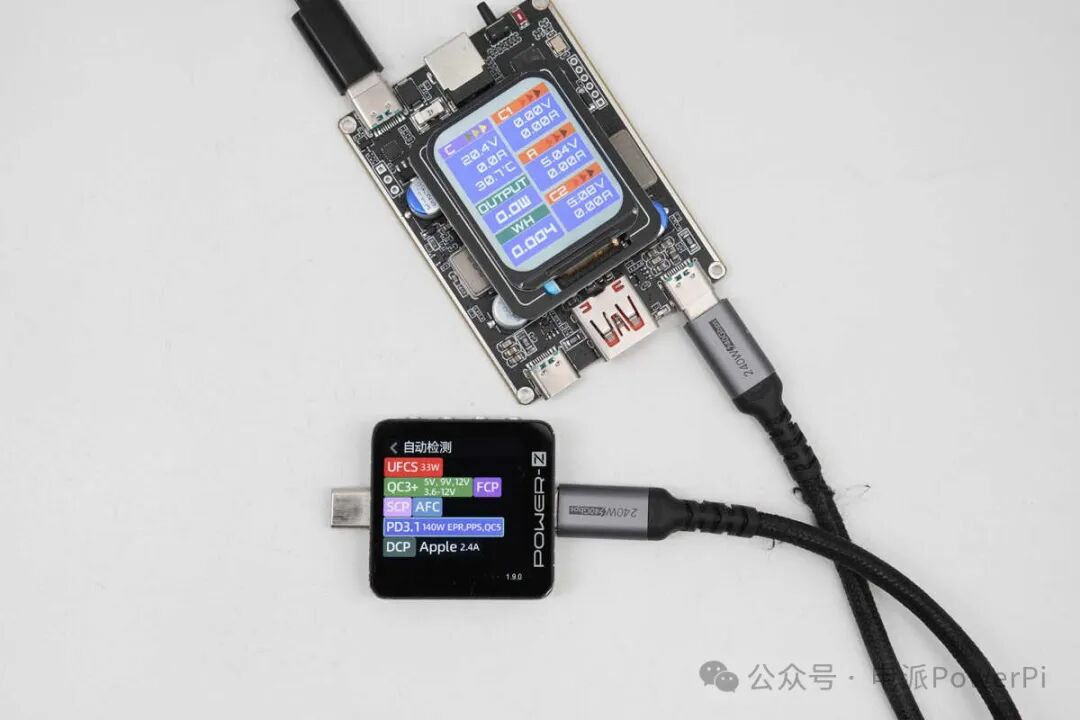
Let's take another look at the Type-C2 port protocol. Using the POWER-Z KM003C to read the Type-C2 port fast-charging protocol, actual tests show support for UFCS, QC3, FCP, SCP, AFC, PD3.1, PPS, QC5, DCP, and Apple 2.4A charging protocols.
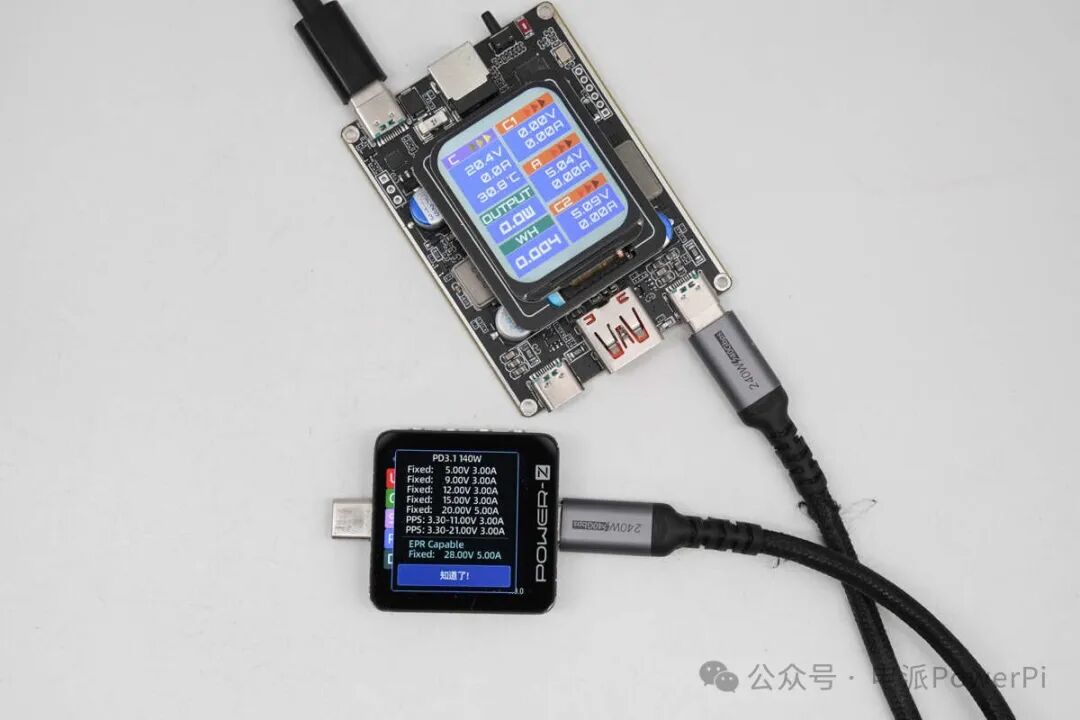
Regarding PDO messages, the C2 port supports six fixed voltages: 5V/3A, 9V/3A, 12V/3A, 15V/3A, 20V/5A, and 28V/5A, as well as two PPS levels: 3.3-11V/3A and 3.3-21V/3A.
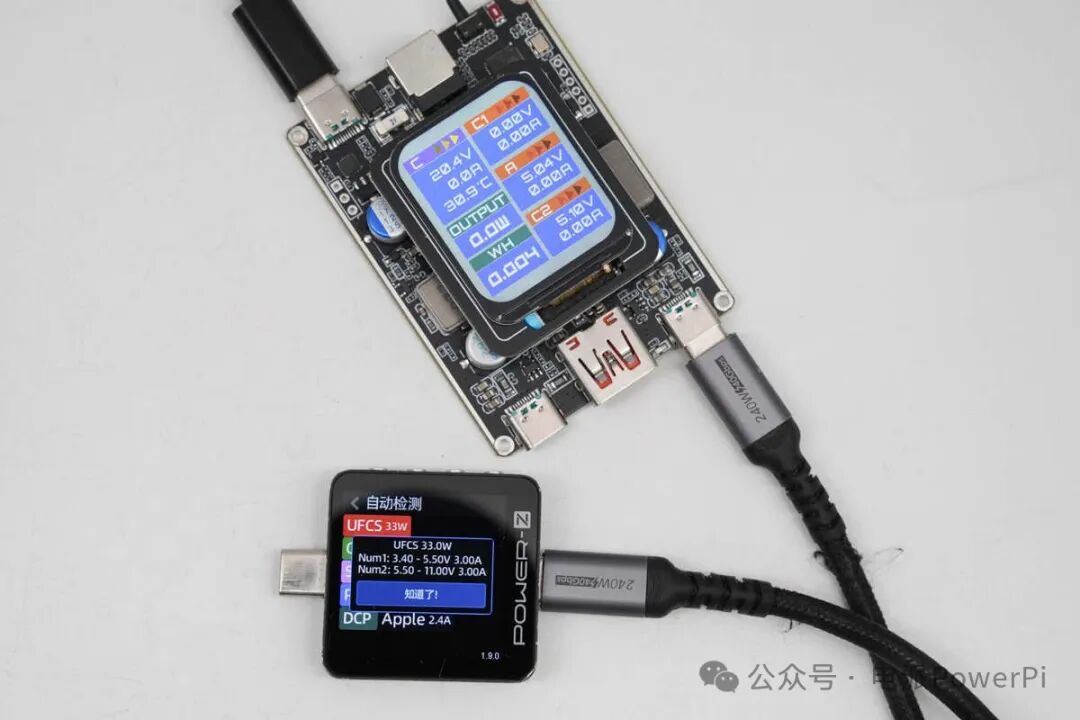
For UFCS messages, the port supports two voltage levels: 3.4-5.5V/3A and 5.5-11V/3A.
Type-A
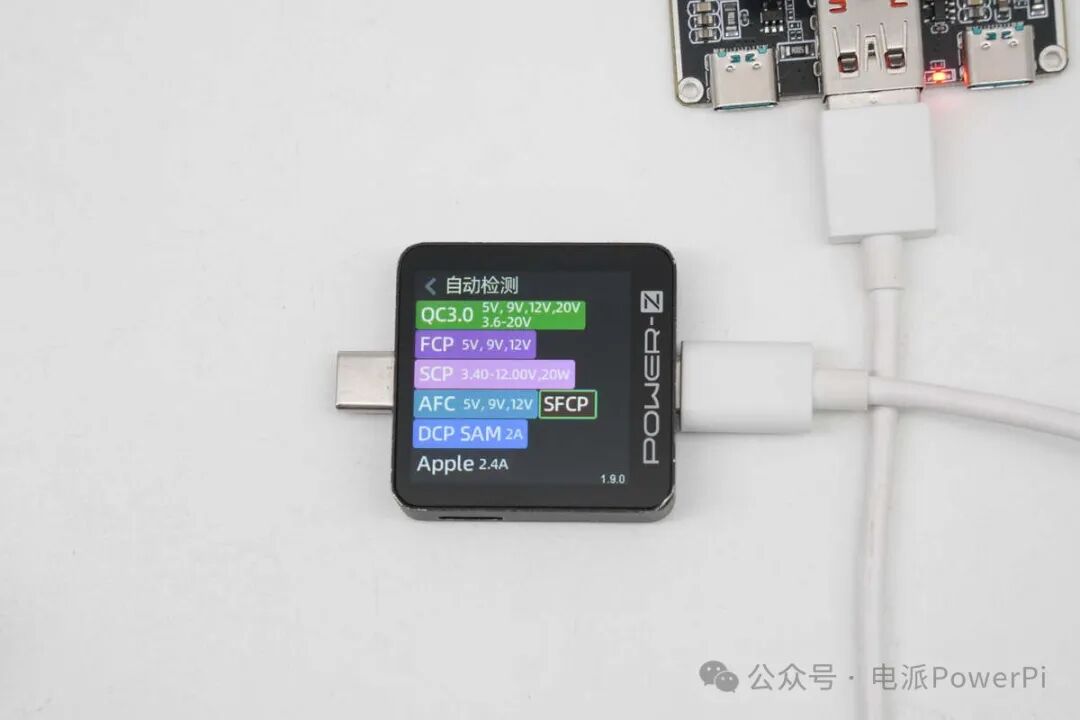
Using the POWER-Z KM003C to read the Type-A port fast-charging protocol, actual tests show support for QC3.0, FCP, SCP, AFC, SFCP, DCP, SAM 2A, and Apple 2.4A charging protocols.
Chargerlab summary
Overall, this development board features an IPS HD screen that can display the charging status of each interface in real time. It supports Type-C PD3.1 and a wide DC input range of 12-30V, with three independent fast-charging outputs of 140W, 65W, and 45W, allowing multiple high-power devices to charge simultaneously.
In terms of compatibility, it supports UFCS, QC3, FCP, SCP, AFC, PD3.1, PPS, QC5, DCP, and Apple 2.4A, making it compatible with most mainstream phones, tablets, and lightweight laptops. The UFCS integrated fast-charging protocol is also aligned with current mainstream phone fast charging.
Overall, this ESP32 IP6557 dual SW3526 development board features high power, multiple independent outputs, and multi-protocol support. Notably, the hardware integration of the ESP32 and the screen adds more versatility for wireless connectivity and IoT applications.
Purchase link for the products above: